Microsoft has unveiled a new generation of AI-powered Windows PCs featuring NVIDIA RTX Spark technology, alongside significant Windows 11 upgrades designed to bring more artificial intelligence capabilities directly to personal computers. The announcement marks a major step in Microsoft’s efforts to make Windows a platform for AI agents, local AI models, and advanced developer workflows.
Announced on October 7, 2026, the new lineup includes the Surface Laptop Ultra and Surface RTX Spark Dev Box. The company also revealed new software features intended to improve AI performance, security, and the way applications interact with files and other resources on a computer.
Microsoft Introduces a New Era of AI-Powered PCs
Artificial intelligence is becoming an increasingly important part of personal computing. Microsoft is responding to this shift by combining powerful hardware with software designed to run AI workloads locally rather than relying entirely on cloud-based services.
The newly announced devices are built around NVIDIA’s RTX Spark technology. They are designed for developers, content creators, AI researchers, and professionals who need substantial computing power to run demanding applications.
Unlike conventional computers that depend heavily on remote servers for advanced AI processing, these systems aim to execute many AI tasks directly on the device. This approach can help reduce cloud usage, improve responsiveness, and provide users with greater control over certain types of data.
Microsoft describes this direction as hybrid intelligence, where a computer can use local processing for suitable workloads while accessing cloud computing when additional capabilities are needed.
Surface Laptop Ultra Brings NVIDIA AI Computing to Windows
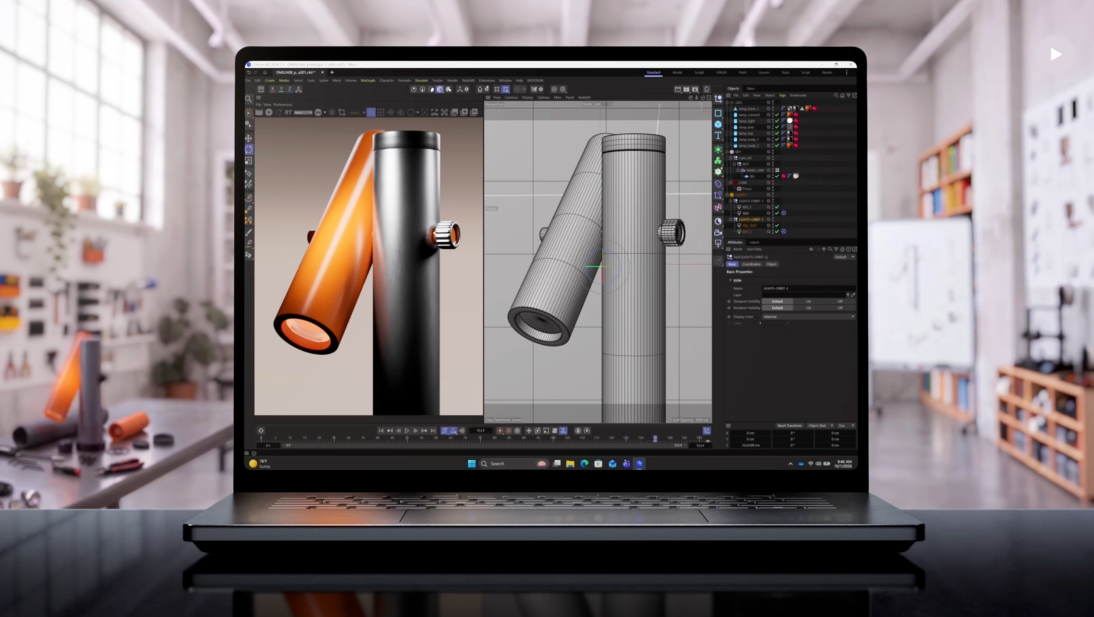
One of the central products in Microsoft’s announcement is the Surface Laptop Ultra. The premium laptop is designed to support demanding AI workloads while remaining suitable for creative and professional applications.
According to the announcement, the device can be configured with up to 128GB of unified memory, enabling it to handle large AI models and complex computing tasks. Microsoft is positioning the laptop as a powerful option for people who develop software, experiment with AI models, generate media, and perform other resource-intensive activities.
The Surface Laptop Ultra starts at approximately $2,600, with higher-end configurations costing considerably more. The most expensive configurations can reach nearly $5,900, depending on the selected hardware.
Preorders opened following the announcement, with availability scheduled to begin on October 16, 2026.
The pricing places the laptop in the premium computing category, particularly for professionals who need high-performance local AI processing.
Surface RTX Spark Dev Box Targets AI Developers
Microsoft also introduced the Surface RTX Spark Dev Box, a workstation designed for software developers, AI engineers, and technical teams.
The system is intended to provide substantial computing resources for experimenting with AI models, evaluating software, and building applications. Microsoft says it will support a collection of developer tools, including Visual Studio Code, GitHub Copilot CLI, Windows Subsystem for Linux, and PowerShell 7.
The workstation starts at approximately $6,000 and is expected to begin shipping to customers in the United States in November 2026.
By bringing AI computing capabilities to a dedicated workstation, Microsoft hopes to make it easier for developers to build and test AI applications without relying exclusively on remote computing infrastructure.
Revamped Windows 11 Adds Microsoft Execution Containers
Hardware is only part of Microsoft’s announcement. The company is also expanding Windows 11 with features designed to support AI agents more securely.
A major addition is Microsoft Execution Containers, commonly abbreviated as MXC. The technology is designed to restrict the resources AI agents can access while they execute tasks on a computer.
AI agents can do more than answer questions. Depending on their permissions, they may interact with applications, read files, execute code, and perform multi-step operations. These capabilities can introduce security risks if an agent receives broader access than it needs.
Microsoft Execution Containers are designed to help address those risks by allowing policies to control access to files and networks. Organizations can use these controls to define boundaries around automated activity.
Microsoft announced that MXC is generally available on Windows 11, with support from several AI development tools and agent platforms.
The goal is to make it easier for users and organizations to adopt AI automation while maintaining stronger control over what those systems can do.
Windows Moves Toward Local AI Processing
Another important development is Microsoft’s effort to run more AI models directly on Windows PCs.
Cloud-based AI services remain valuable for complex tasks, but local processing can offer advantages in responsiveness, privacy, and operating costs. When a model runs on a compatible computer, some requests can be processed without sending all relevant information to a remote service.
Microsoft is working to support models from different developers, including NVIDIA’s Nemotron family and other advanced AI systems. Certain large models will require computers with substantial memory and suitable hardware.
The company is also bringing its MAI Code 1.1 Flash coding model to local computing environments. This model is intended to help developers work with code directly on supported devices.
Local AI performance will depend on the specific model, available memory, hardware configuration, and software optimization. Not every AI model or task will run efficiently on every Windows PC.
Copilot Gains More Local Capabilities
Microsoft is also developing a more capable Copilot experience through its hybrid intelligence strategy.
With appropriate permissions, Copilot is expected to make better use of relevant information stored on a user’s computer. It will also be able to perform certain actions within Windows and use compatible AI models running locally.
Potential applications include organizing files, assisting with software development, troubleshooting computer problems, and helping users complete multi-step workflows.
The system is intended to choose between local and cloud processing according to the requirements of a particular task.
Microsoft says Copilot features powered by hybrid intelligence are expected to begin rolling out to Copilot+ PCs in the coming months. Availability will depend on the relevant feature and supported hardware.
Other PC Manufacturers Join the NVIDIA AI Initiative
Microsoft is not pursuing this market alone. Several PC manufacturers are preparing systems built around NVIDIA RTX Spark technology.
The announced lineup includes products from ASUS, Dell, HP, Lenovo, and MSI, alongside Microsoft’s own Surface devices.
These systems target different types of users, including creative professionals, software developers, and people who need powerful local computing for AI applications.
Dell’s XPS 16 Creator Edition, for example, is aimed at users who want a premium computer for creative and technical workloads. Other manufacturers are developing laptops that combine AI acceleration with high-resolution displays and portable designs.
A broader selection of hardware could help make local AI computing available across more price points and device categories over time. However, the newly announced premium systems remain expensive compared with mainstream laptops.
What Local AI Means for Everyday Users
The move toward AI-powered computers could change how people use their devices.
For developers, local models may provide a more convenient environment for testing code and experimenting with AI applications. Content creators may benefit from tools that accelerate image generation, video processing, and other demanding workflows.
Businesses could also use local AI capabilities to process selected information within their own computing environments. This may be useful when privacy, responsiveness, or cloud costs are important considerations.
However, local processing does not automatically guarantee privacy or security. Users still need to review application permissions, protect their devices, and understand which information is transmitted to online services.
For everyday consumers, the practical benefits will depend on the applications they use and whether those applications take advantage of the new hardware.
How Microsoft’s Strategy Compares With Traditional PCs
Traditional PCs primarily rely on their CPUs and GPUs to run applications, games, and productivity software. AI-focused computers add hardware and software capabilities designed to handle AI workloads more efficiently.
Microsoft’s new direction combines local AI models, cloud services, and tools for managing AI agents. Rather than moving every task to the cloud or processing everything on the device, Windows is intended to select the appropriate approach for different workloads.
This hybrid model could provide a balance between performance, capability, and cost.
Nevertheless, actual results will vary according to the model being used, the computer’s configuration, and the complexity of the task. Independent testing will be important for determining how these new systems perform in everyday situations.
Challenges Facing the New AI PC Market
Despite the potential benefits, Microsoft’s new AI PCs face several challenges.
High prices: Premium AI hardware can cost thousands of dollars, putting it beyond the budgets of many consumers.
Software compatibility: Developers need compatible applications and optimized AI models to take full advantage of the hardware.
Power and cooling: Running demanding AI workloads can require substantial power and effective thermal management.
Security and privacy: AI agents need carefully managed permissions to prevent unintended access to sensitive information.
Real-world performance: Marketing claims and theoretical hardware capabilities do not always translate into equivalent improvements across every application.
Addressing these issues will be important as Microsoft and its hardware partners attempt to expand the market for local AI computing.
What Comes Next for Windows 11?
Microsoft’s October announcement suggests that the future of Windows will involve more than traditional desktop applications. The company is building an environment in which AI models and automated agents can work alongside users while operating within defined security boundaries.
The expansion of local AI processing could also influence how developers build applications and how businesses deploy intelligent software.
Over time, more affordable hardware and better software optimization could make some of these capabilities available to a wider audience.
For now, the Surface Laptop Ultra and Surface RTX Spark Dev Box represent Microsoft’s push toward high-performance AI computing, while Windows 11’s security and hybrid intelligence features provide the software foundation for that strategy.
Conclusion
Microsoft’s new NVIDIA-powered AI PCs and revamped Windows 11 features represent a significant development in the company’s AI strategy. The Surface Laptop Ultra and Surface RTX Spark Dev Box are designed to handle demanding local AI workloads, while Microsoft Execution Containers introduce additional controls for managing AI agents.
The combination of local models, cloud intelligence, and improved security could create new opportunities for developers, creative professionals, and businesses.
However, the high cost of the new hardware means that its immediate appeal will likely be strongest among professional users and AI enthusiasts. Broader adoption will depend on software support, real-world performance, and whether future devices make these capabilities more affordable.
As the AI PC market evolves, Microsoft’s approach will help shape how artificial intelligence is integrated into Windows computers.
Source: Microsoft Windows Experience Blog and Microsoft’s October 7, 2026, Windows and Surface announcement.
Suggested SEO Title: Microsoft Launches NVIDIA-Powered AI PCs With New Windows 11 Features
Meta Description: Microsoft unveils NVIDIA RTX Spark-powered AI PCs, including Surface Laptop Ultra, alongside Windows 11 upgrades for local AI models and secure AI agents.
Suggested URL Slug: microsoft-nvidia-ai-pcs-windows-11
Focus Keyword: Microsoft NVIDIA AI PCs
Related Keywords: Surface Laptop Ultra, NVIDIA RTX Spark, Windows 11 AI features, Microsoft Execution Containers, local AI computing, AI-powered laptops, Microsoft Copilot, AI developer workstation